
Books by Rad Stephens

Choose where you want to enter the system.

Each book stands alone. Together they trace a progression: how a powerful operating machine creates pressure, how metrics and AI acquire authority, and how automated decisions begin validating themselves. Start with the problem closest to the work you know.

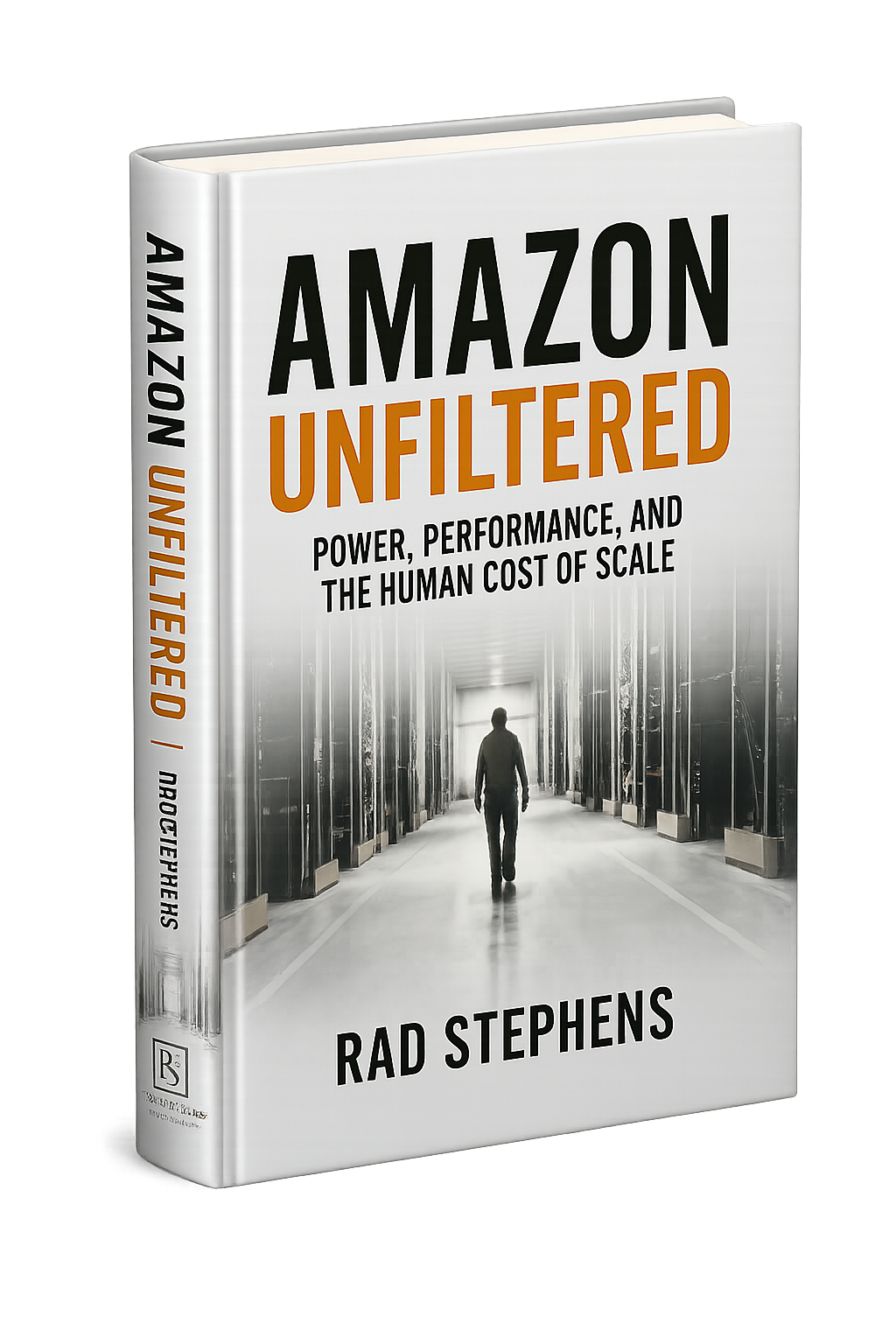
Front cover of Amazon Unfiltered: Power, Performance, and the Human Cost of Scale by Rad Stephens.

Book One

Amazon Unfiltered

Power, Performance, and the Human Cost of Scale

The package arrives. The promise is kept. The customer rarely sees the operation that made it possible or the people who absorbed the cost when the plan failed. Drawing on eight years inside Amazon logistics, Rad Stephens takes readers from the night shift and warehouse floor through dispatch, delivery partners, route forecasting, station launches, pandemic operations, and network quality. He explains how Amazon achieves extraordinary speed, how metrics and leadership culture shape daily behavior, and why context often disappears when a number becomes the official version of events. This is not a simple attack on Amazon. It is a firsthand account of innovation, opportunity, operational brilliance, corrosive leadership, and the human consequences of scale.
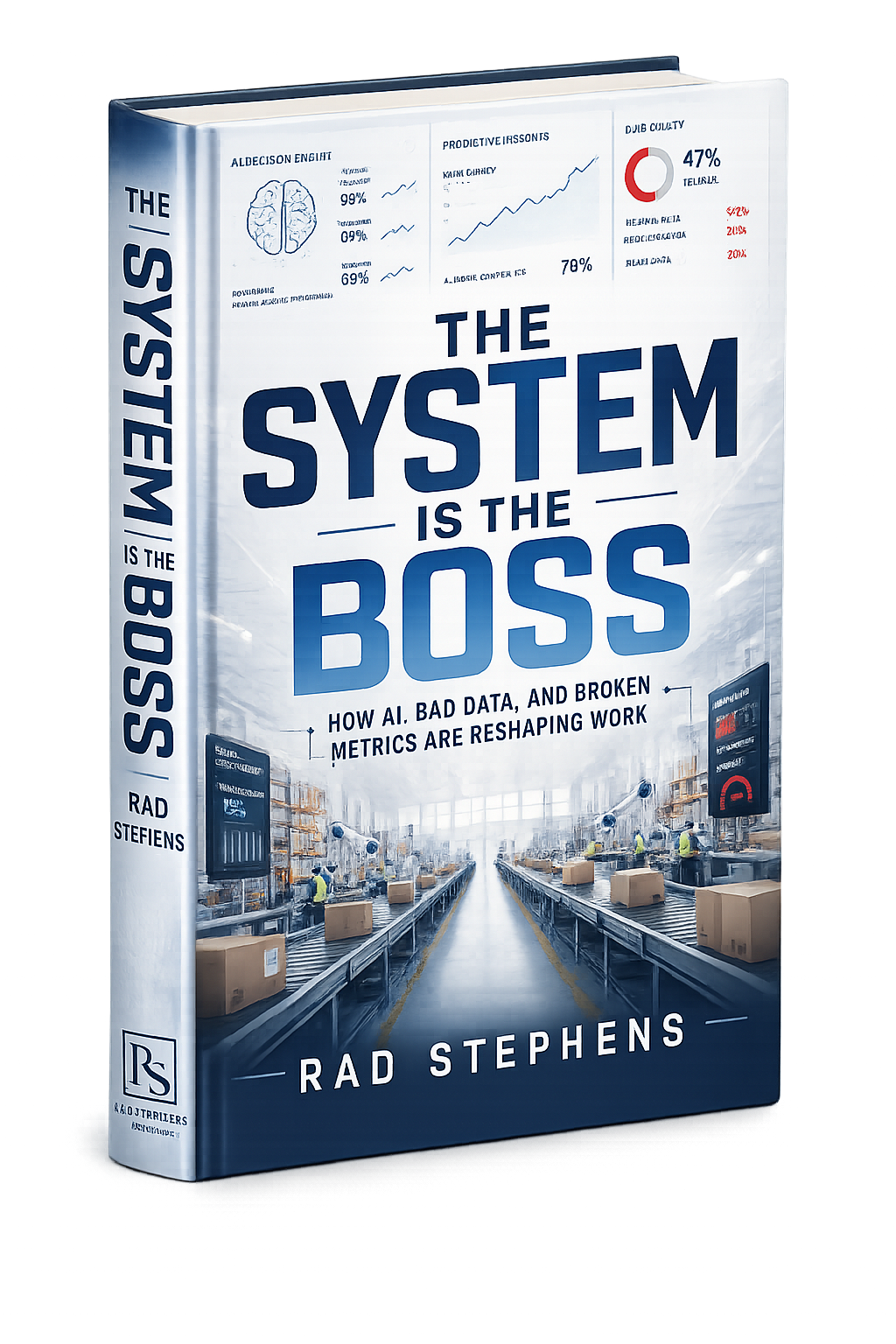
Front cover of The System Is the Boss: How AI, Bad Data, and Broken Metrics Are Reshaping Work by Rad Stephens.

Book Two

The System Is the Boss

How AI, Bad Data, and Broken Metrics Are Reshaping Work

The org chart says a person is in charge. The workday often says otherwise. Forecasts set staffing, models assign workload, dashboards define success, and AI-supported recommendations arrive with the authority of finished decisions. The System Is the Boss shows how measurement becomes authority, how separate systems begin shaping one another’s reality, and why managers are increasingly asked to enforce choices they did not make. Through operational scenes and composite characters drawn from more than three decades of experience, Rad Stephens gives readers language for responsibility without power, alignment as survival, downward accountability, and the loss of human discretion. This is not an argument against data or automation. It is an argument for seeing who actually decides, who carries the consequences, and where responsibility still has to remain human.

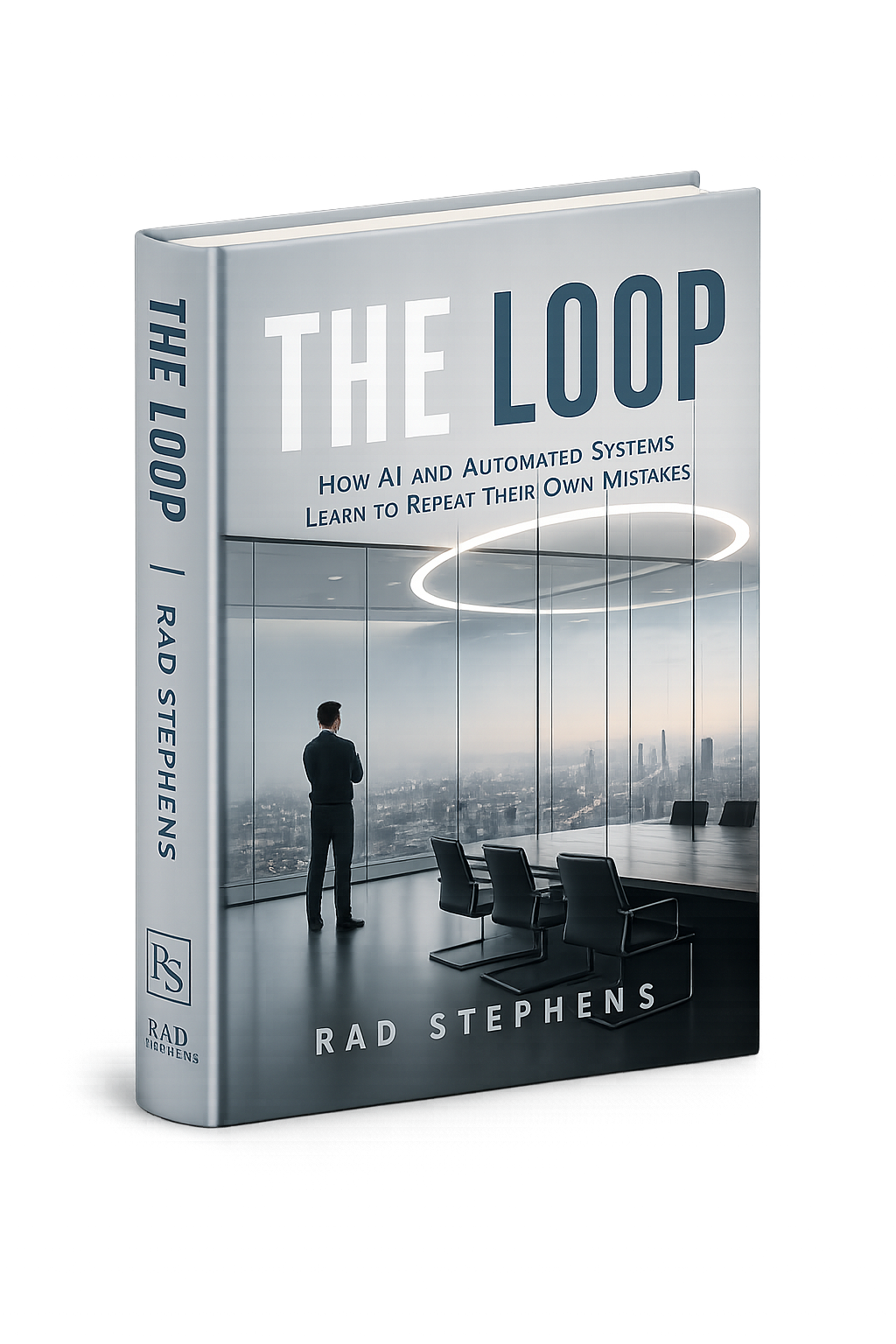
Front cover of The Loop: How AI and Automated Systems Learn to Repeat Their Own Mistakes by Rad Stephens.

Book Three

The Loop

How AI and Automated Systems Learn to Repeat Their Own Mistakes

A system makes a decision. The decision changes the world. The changed world produces new data, and the system mistakes that data for independent proof that the original decision was right. The Loop reveals this self-reinforcing pattern across hiring, lending, content feeds, policing, customer service, generative AI, copilots, and autonomous agents. Rad Stephens shows why a system’s best-looking numbers can conceal its deepest error, how machine-generated language becomes evidence for the next machine, and why a human reviewer may be present without providing real oversight. The book then turns diagnosis into practice with independent evidence, exception ownership, provenance, evidence logs, breaker switches, near-miss reporting, and twelve questions leaders can use before a closed loop tightens around the organization.

Which book should you read first?

Start with the problem closest to your work.

Amazon Unfiltered

Start here for the firsthand inside story of Amazon logistics, operational pressure, delivery partners, leadership culture, and the people behind the customer promise.

Enter the Machine

The System Is the Boss

Start here for the broader workplace argument about dashboards, forecasts, AI, authority, discretion, and responsibility without power.

See Who Is Really in Charge

The Loop

Start here for the practical framework that explains self-reinforcing automated systems and the safeguards that can interrupt them.

Learn to Break the Loop

Read one for the problem in front of you. Read all three for the full system.

Compare Formats and Availability