
Reported performance and frontline reality are telling different stories.
Operations Advisory
The dashboard isn't the operation.
Find what your metrics, processes, and systems are missing before small gaps become bigger operational problems.
Rad Stephens helps operations leaders identify hidden performance gaps, broken KPIs, process friction, data problems, and accountability failures, then turn those findings into practical operating improvements.
Initial conversations stay high-level. No proprietary or sensitive operating data is required.
Illustrative Operations Dashboard
Reported KPIOn Target
Service Level98.4%
Manual WorkaroundsIncreasing
Exception OwnershipUnclear
The question behind the dashboard
What is happening in the operation that the metric cannot see?
30+ YearsOperations and technology experience
8 Years at AmazonLarge-scale logistics and operational metrics
Operations + Systems + DataFrom frontline execution to leadership decisions
Does this sound familiar?
The numbers look controlled. The operation feels anything but controlled.
Some of the most consequential operating problems are not invisible. They are visible to the people doing the work, but missing from the measurement and decision system.
Definitions, sources, or ownership are inconsistent enough to change the answer.
Reporting work is absorbing capacity without making the operating problem clearer.
Accountability becomes unclear when performance crosses functions, systems, or vendors.
A flawed workflow or data source is now moving at greater speed and scale.
The documented operating model no longer reflects how work actually gets done.
If one or more of these looks familiar, the problem may not be performance alone. It may be the operating system used to measure, manage, and improve performance.
Quick reality check
Is your dashboard telling you the whole story?
This informational self-assessment can help surface where a deeper review may be useful. It is not a definitive diagnosis.
Start here
The Operations Reality Audit
A structured review that connects what happens in the operation to what leadership measures, sees, and acts on.
Observe
Understand how the work actually happens, including handoffs, exceptions, and workarounds.
Measure
Examine KPIs, targets, definitions, thresholds, ownership, and incentives.
Trace
Follow information from operational event through data, dashboard, interpretation, and action.
Diagnose
Separate symptoms from root causes across process, data, systems, and accountability.
Redesign
Prioritize practical changes to metrics, workflow, governance, controls, and operating cadence.
30-minute introductory conversation. No proprietary data required.
Make the work tangible
See what an audit can produce.
The exact deliverables depend on scope. This illustrative example shows how findings can be translated into a prioritized operating view rather than another generic presentation.
- Executive findings
- Root-cause analysis
- Quick wins
- Priority risks
- Ownership gaps
- Improvement roadmap
Operations Reality AuditIllustrative Example
01
Metric conflict
Operational impact: Leadership receives contradictory service-performance signals.
Recommended action: Establish one KPI definition, source, owner, and escalation threshold.
02
Unowned exception
Operational impact: A recurring failure path can cross functions without a timely decision owner.
Recommended action: Assign exception ownership, decision rights, and escalation timing.
03
Hidden workaround
Operational impact: Manual effort masks process friction and consumes capacity outside the standard workflow.
Recommended action: Map the workaround, identify its trigger, and determine whether the process or system should change.
04
Reporting lag
Operational impact: Leadership sees the issue after the practical intervention window has passed.
Recommended action: Identify an earlier signal and align the reporting cadence to the decision window.
Advisory capabilities
Choose the operating problem, not a generic consulting package.
Each service is designed around a specific decision or operating problem. The Operations Reality Audit can also be used to determine where deeper work would have the greatest value.
Metrics & KPI Architecture
Determine whether your metrics are measuring what actually matters.
Explore service → Operations DiagnosticFind the real source of operational friction.
Explore service → Process & Operating ModelClarify how work, decisions, and accountability should move.
Explore service → Logistics, Transportation & 3PL/4PL OperationsImprove flow, service levels, partner performance, and accountability.
Explore service → AI & Automation GovernanceMake sure automation is not accelerating the wrong process.
Explore service → Executive Operations AdvisoryBring independent operational perspective to decisions that need clarity.
Explore service →Who this is for
Built for leaders responsible for operational performance.
Operations Advisory works with executives and operational leaders responsible for operations, supply chain, logistics, process improvement, performance measurement, and business transformation.
It is especially useful when the operation is producing friction, workarounds, conflicting metrics, unclear ownership, or performance problems that existing dashboards and reporting do not fully explain.
Leadership roles
- COOs
- VP Operations
- VP Supply Chain
- VP Logistics
- Directors of Operations
- Operational Excellence leaders
- Continuous Improvement leaders
- Business Transformation leaders
- Program Management leaders
- Founders and CEOs of growing operational businesses
Operational responsibility
- Vendors and 3PL/4PL partners
- Transportation networks
- KPIs and performance measurement
- Reporting systems and operational data
- Automation and decision systems
- Complex processes and cross-functional operating environments
How an engagement starts
Make the first step simple.
The goal of the initial conversation is to understand the operating question and determine whether a focused advisory engagement makes sense.
Before we talk
Common questions about Operations Advisory.
The first conversation is intentionally simple. These answers cover what most leaders want to know before reaching out.
What kinds of organizations do you work with?
The work is relevant to organizations dealing with complex operations, logistics, metrics, technology, workflows, vendors, service providers, or performance-management challenges. The initial conversation is used to determine whether the operating question is a fit for the advisory approach.
Is Operations Advisory limited to logistics?
No. Logistics is one area of deep operating experience, but the advisory work focuses more broadly on how organizations design, measure, manage, automate, and improve operations.
What information do I need for the first conversation?
Only a high-level description of the operational challenge is needed initially. Proprietary operating data, confidential reports, or internal datasets are not required for the introductory conversation.
What happens after the introductory conversation?
If the challenge appears appropriate for advisory work, the next step is to define the problem, determine the right engagement structure, identify the information required, and establish expected outputs and next steps.

Why Rad Stephens
Operational experience, not theoretical consulting.
More than 30 years working across operations, technology, logistics, metrics, systems, vendors, program management, and process improvement, including eight years inside Amazon operations.
The advisory practice is built around examining how operating work, measurement systems, technology, and accountability interact in real organizations.
Start the conversation
Request an Advisory Conversation
Tell us the operating problem in plain language. The first conversation is designed to determine what needs to become clearer and whether an advisory engagement is appropriate.
- 30-minute introductory conversation. Focus on the operating question, not a sales presentation.
- No proprietary data required. Keep the initial inquiry high-level.
- Clear next step. If there is a fit, define scope, information needs, and expected outputs.
Privacy note: Do not submit proprietary, confidential, regulated, personal, or otherwise sensitive operational data through this public form.
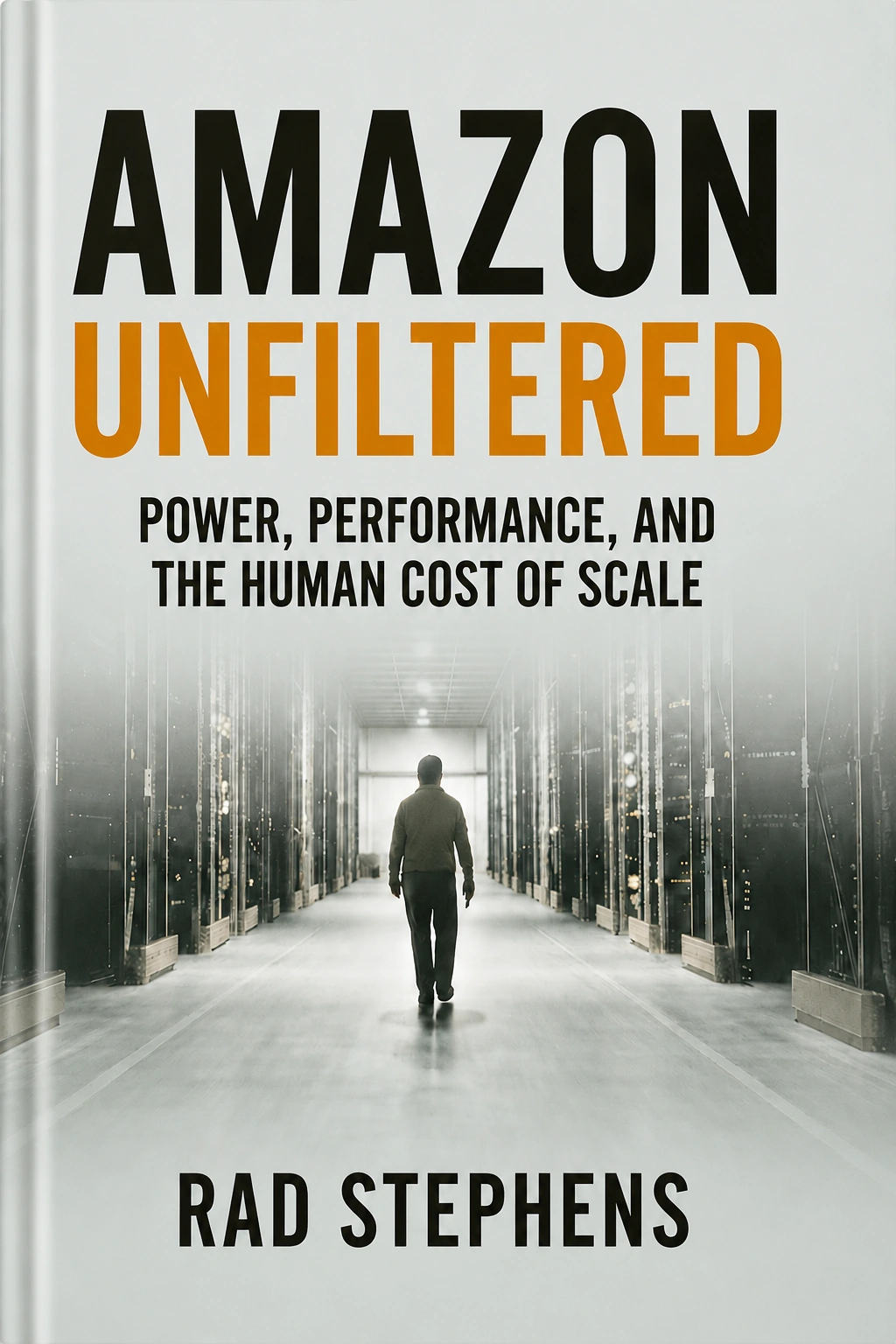
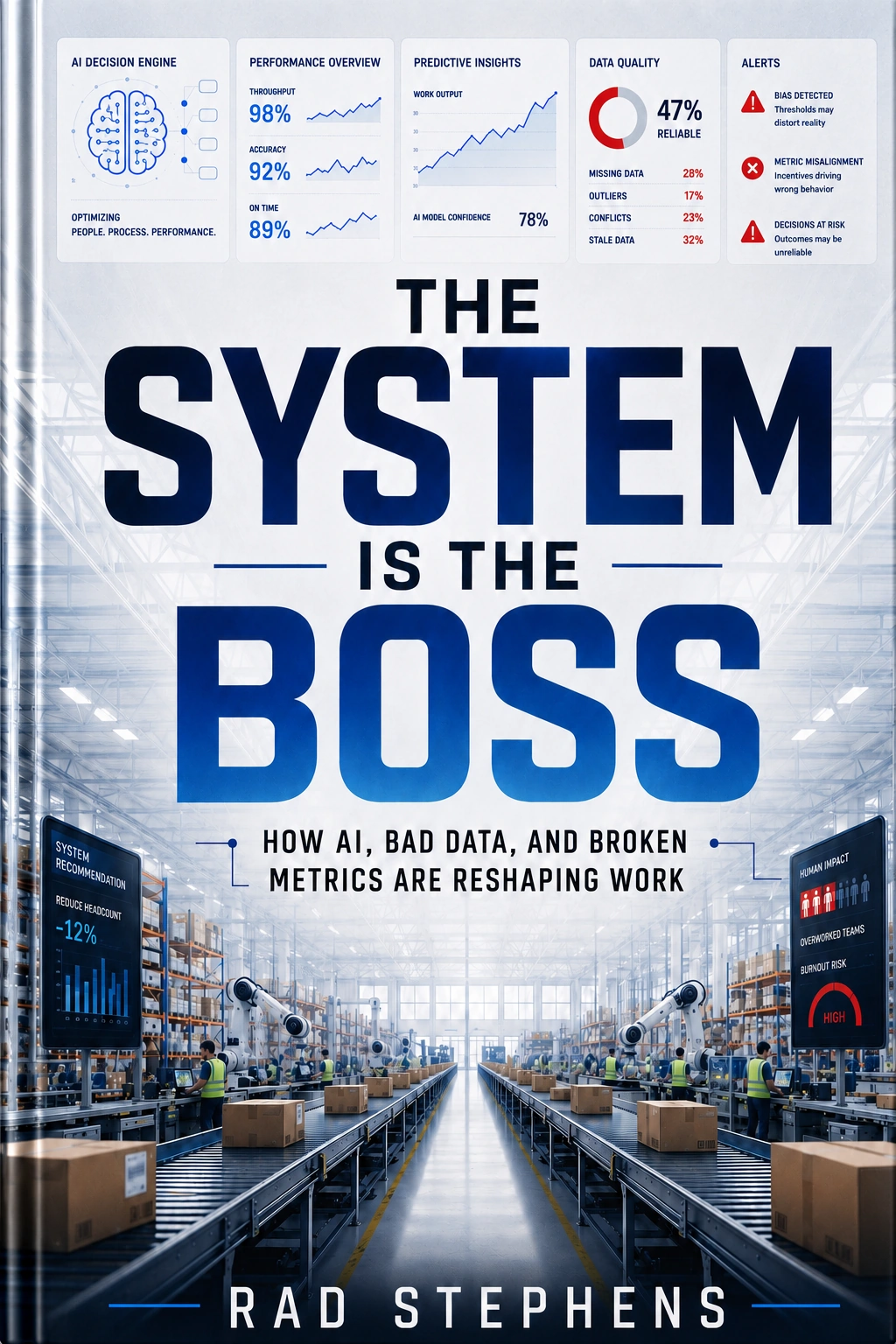
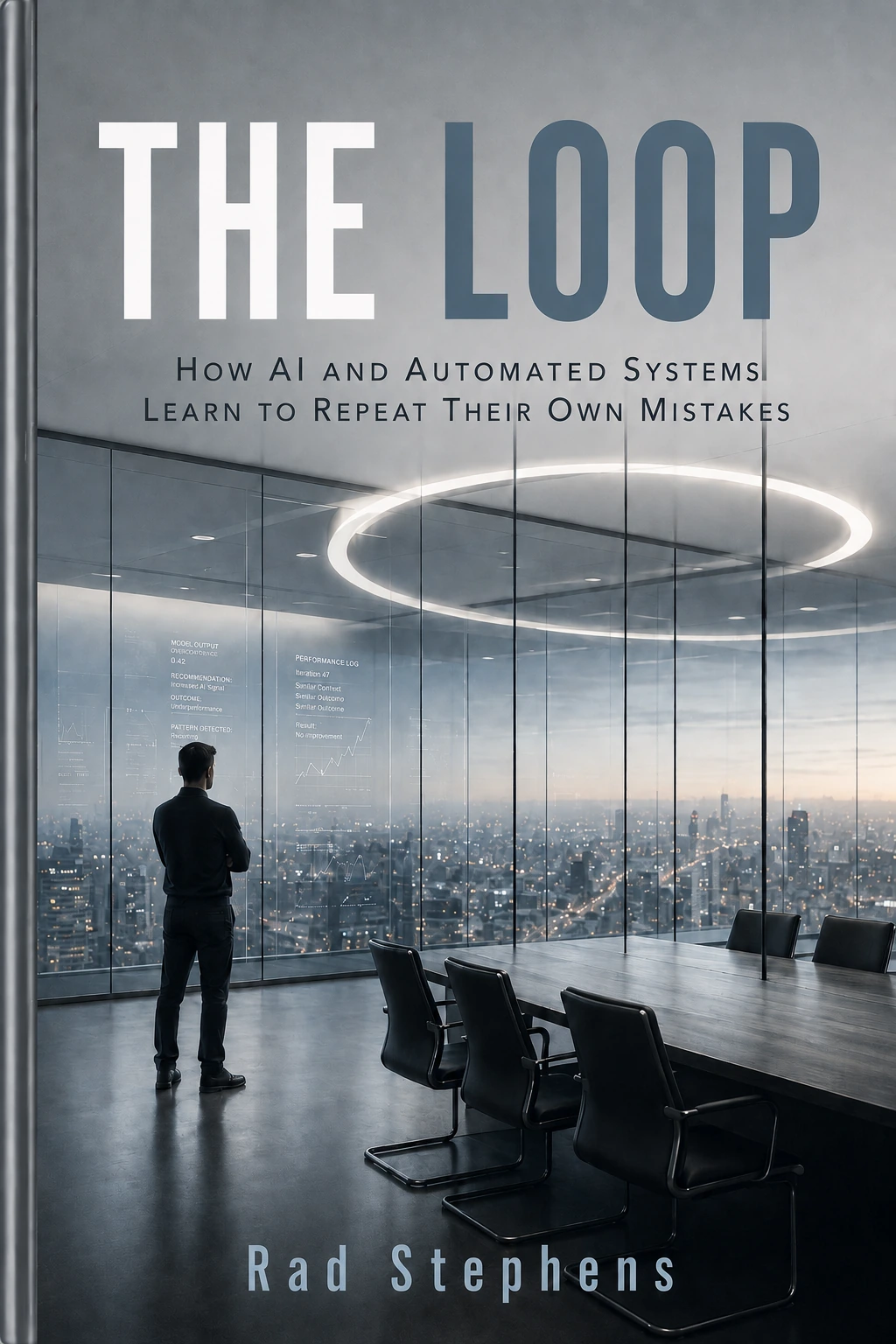
The thinking behind the advisory practice
Rad Stephens is the author of Amazon Unfiltered, The System Is the Boss, and The Loop, examining how metrics, automation, scale, and operational systems influence organizations.